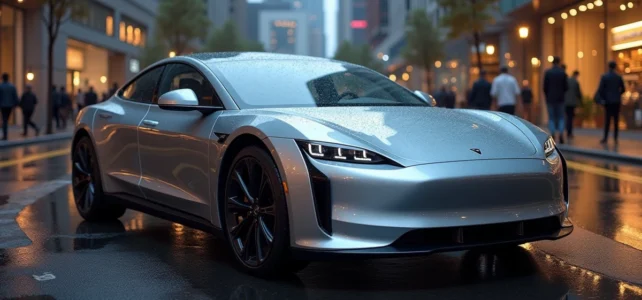
The French automotive market recorded 126,808 registrations in July 2026, representing a growth of 9% compared to the same period last year. This increase masks very different dynamics depending on the types of engines and segments, with a marked shift towards electric vehicles that is redefining the balance of power among manufacturers.
Electric Vehicles in France: A Market Share Exceeding One-Third of Sales
In July 2026, electric vehicles accounted for 35% of monthly registrations with 44,378 units, marking a 127% increase year-on-year. This figure not only reflects a temporary enthusiasm but also the convergence of several factors: an expanded range offered by manufacturers, tightening European CO2 standards, and the continuation of purchase assistance schemes.
At the European level, electric vehicles exceed 20% market share in the first half of 2026, according to data from Moniteur Automobile. The European market as a whole is growing by about 5.7%, driven by this shift towards zero-emission engines.
To track these developments month by month, the news on autoworldblog.net details the trends in the automotive sector and key figures for each segment.
Global Automotive Production in 2026: A Paradox with the Sales Rebound
The increase in registrations in Europe might suggest that the automotive industry is operating at full capacity. However, the reality on the production side is different. The Atradius report from July 2026 anticipates a slight decline in global vehicle production, estimated at around -0.2% after a nearly 3% increase in 2025.

Three factors explain this discrepancy between sales and production:
- Trade protectionism, with increased tariffs between major economic zones, disrupts supply flows and raises component costs.
- Constraints on battery materials (lithium, cobalt, nickel) slow down the ramp-up of assembly lines dedicated to electric vehicles.
- The decline in consumer confidence in several Asian markets hampers orders, particularly in China, where the domestic market has declined for the first time in six years.
This paradox between European commercial dynamism and global industrial slowdown is one of the least covered angles by mainstream automotive media. It has direct consequences on delivery times and manufacturers’ pricing policies.
Financial Results of European Manufacturers: Stellantis, BMW, and Forvia Under Pressure
The semi-annual publications from July 2026 paint a contrasting picture. Stellantis returns to profitability in the first half of 2026 after a 2025 dedicated to restructuring its assets and product plan. The recovery is visible in North America, but the operating margin remains negative in Europe.
The three priorities identified by Antonio Filosa (market coverage, industrial costs, quality) are beginning to yield measurable effects, yet they do not bring the group back to pre-crisis profitability levels.
BMW reports an operating margin that has fallen to 2.3% in the second quarter, an unusually low level for the Munich-based manufacturer. Price pressure in China and massive investments in electrification weigh heavily on the accounts.
On the supplier side, Forvia saw its revenue decline by 4.3% in the first half of 2026, to €10.5 billion. The former Faurecia has only recorded one year of positive net income since 2020. This financial fragility illustrates the difficulty suppliers face in absorbing the transition to electric while maintaining their margins on declining thermal components.
China: Rising Exports, Declining Domestic Market
The Chinese market is experiencing a significant decline domestically, but Chinese manufacturers are compensating with a surge in exports. This movement alters the global competitive balance: Chinese vehicles, particularly electric ones, are arriving in increasing volumes in the European market, intensifying pressure on historic brands.
European CO2 Standards and Emission Limits: Which Manufacturers Are Out of Compliance
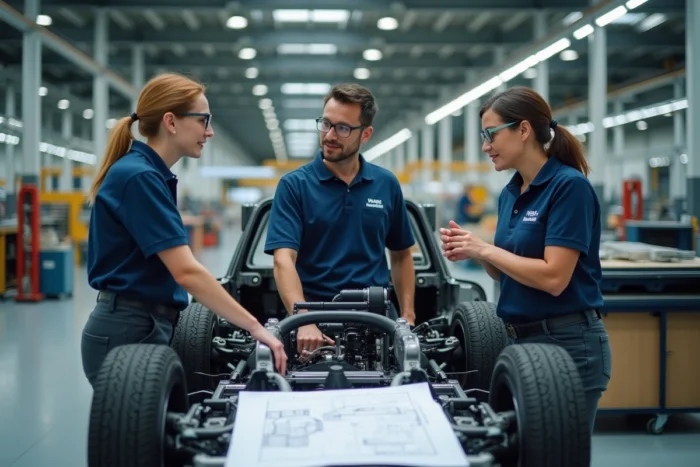
The European Union has recently relaxed the calculation of CO2 emissions by spreading it over three years instead of one, particularly for the calculation of fines. Despite this adjustment, some manufacturers individually exceed the allowed thresholds and are even moving in the wrong direction.
Seat finds itself in a paradoxical position within the Volkswagen group: the Spanish brand sells few electric models on its own and remains exposed to penalties. Mazda, on the other hand, has never produced a true non-rechargeable hybrid, a powertrain that is now favored in Europe as a transitional solution. This absence in the conventional hybrid segment represents a significant regulatory handicap.
The three-year calculation mechanism offers a reprieve, not a solution. Manufacturers that do not accelerate their electrification or hybridization risk facing substantial cumulative fines starting in 2027.
Used Car Market and New Car Prices: Two Related Pressures
The French are buying fewer new cars, and this trend cannot be explained solely by the economic situation. The average price of new vehicles has steadily increased in recent years, due to the combined effects of technological enrichment of models and the integration of electrified systems.
The used car market absorbs part of this unmet demand. Buyers are turning to vehicles two to four years old, often better equipped than new entry-level models, at more accessible prices. This dynamic creates a reciprocal effect between the two markets.
The used segment also presents its own pressures: the residual value of recent thermal vehicles remains uncertain in light of regulatory tightening, while used electric vehicles still suffer from rapid depreciation linked to technological advancements in batteries.
The automotive sector in 2026 is characterized by this overlay of contradictory signals. The growth of electric sales coexists with a decline in global production, European manufacturers are improving their accounts while facing Chinese pressure, and the used market becomes the true indicator of the automotive purchasing power of French households.