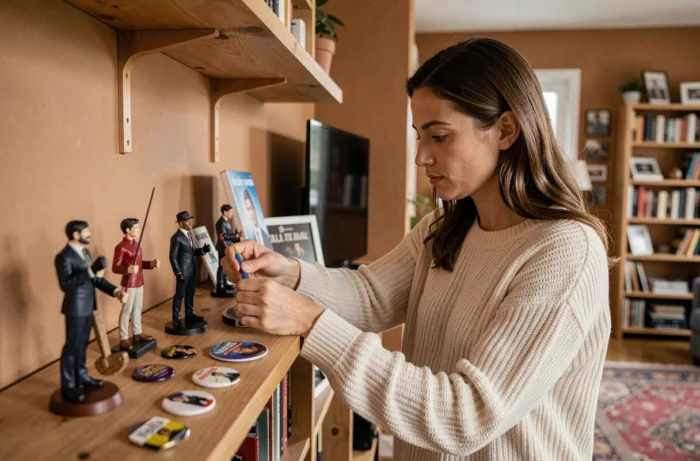
A mug featuring Vecna on your desk, a replica of the Iron Throne on your shelf, a Walter White Pop! figure beside your screen: collectibles inspired by TV shows keep the enjoyment going long after the credits roll.
Bringing the worlds of your favorite shows into your home through collectibles means knowing what you’re looking for, checking what you’re buying, and understanding what will happen to the item when you decide to part with it.
Reproductions, official licenses and authenticity of TV show collectibles
Before snapping up an accessory or figurine, it’s worth asking one question: is the item a reproduction, an officially licensed product or a one-of-a-kind piece? The answer makes all the difference, from the price to its long-term value.
French decree of March 3, 1981 requires copies and facsimiles to be identified as such in any transaction involving collectibles. This rule does not, by itself, guarantee the authenticity of a TV show product, but it reinforces a useful principle: all reproductions must be clearly identified as such.
In practice, an officially licensed item bears the studio or platform logo (Netflix, HBO, Disney) and names the manufacturer on the packaging. Stores specializing in TV show merchandise offer these products with their original markings, making them easier to verify. For example, you can browse complete catalogs at https://www.series-store.fr, where products are organized by franchise.
Found an item on a general marketplace with no mention of a license? At the very least, check the manufacturer’s name and look for a hologram or certificate. The absence of official markings is the first warning sign of a counterfeit.

Figurines, accessories and merchandise: choose an item that suits your needs
TV show merchandise covers a wide range of products. To avoid an impulse buy that ends up in a box, it’s best to decide how you’ll use the item before choosing a category.
Pop! figures and character statues
Funko Pop! figures remain the most accessible entry point. Their standardized size makes them easy to line up. High-end statues (resin, limited editions) appeal to a different kind of collector: someone looking for a display piece with a higher level of detail.
Everyday accessories and TV show merchandise
Mugs, phone cases, clothing, keychains: these items fit into everyday life. They offer two advantages: they show off your passion without taking up display space, and they’re reasonably priced. An accessory you use every day keeps a show’s world alive better than a figurine forgotten in a cupboard.
Board games and themed puzzles
Some publishers create board games and puzzles based on shows such as Stranger Things or Bridgerton. These items add a social dimension to collecting: you can share them at a get-together, unlike a statue.
- Figurines and statues: for displaying and admiring, with prices that vary widely depending on the edition
- Everyday accessories (mugs, textiles, phone cases): for daily use without the need for storage space
- Games and puzzles: for sharing a show’s world with other fans at social gatherings
- Posters and framed prints: for decorating a wall without taking up floor space
Safety and regulations: what the packaging should tell you
Buying a figurine labeled “collector’s item” does not automatically exempt it from the rules that apply to toys. In France, whether toy standards apply depends on the intended use stated on the product: the item must be explicitly described as intended for collectors aged 14 and over. This information must appear on the packaging or product page, not just in the product name.
For online purchases, regulations require safety information to be visible before you place an order. The seller must provide details that identify the product and its manufacturer, along with any relevant warnings. This is a reliable point of reference when comparing figurines or accessories offered by third-party sellers on marketplaces.
Can’t decide between two similar figurines sold at very different prices? You can have more confidence in the one that clearly lists the manufacturer’s name, minimum recommended age and safety symbols than in one whose product page says nothing about these details.
End of life for TV show merchandise: sorting, reuse and the toy recycling scheme
Collectibles sometimes end up leaving the shelf. Whether they’re resold, donated or recycled, what happens to them at the end of their life depends on their type and materials.
Since January 1, 2022, France’s extended producer responsibility scheme has covered toys. Figurines and board games that fall into this category are therefore part of a dedicated collection and processing system. Beyond authenticity and appearance, the materials used (ABS plastic, resin, cardboard packaging) affect how they can be sorted.
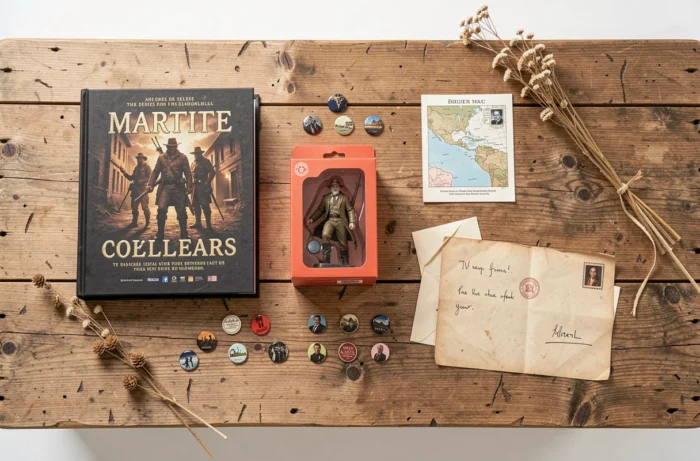
Reuse is the most sensible option for collectors. Resale platforms and conventions dedicated to TV and movie merchandise give items in good condition a second life. An officially licensed item with its original packaging retains far more value than a product without its box or certificate.
- Check whether the item is covered by the toy recycling scheme (look for a note on the packaging) before throwing it in a regular trash can
- Keep the original packaging and any certificate of authenticity to increase its resale value
- Conventions and online collector groups make it easier to find new homes for items you no longer want
Choosing a TV show collectible means weighing immediate enjoyment against the product’s lifespan. A licensed product with clear documentation, kept in its packaging, retains its value far longer than an untraceable novelty item. One last habit to adopt: read the packaging as carefully as the credits of a great show.