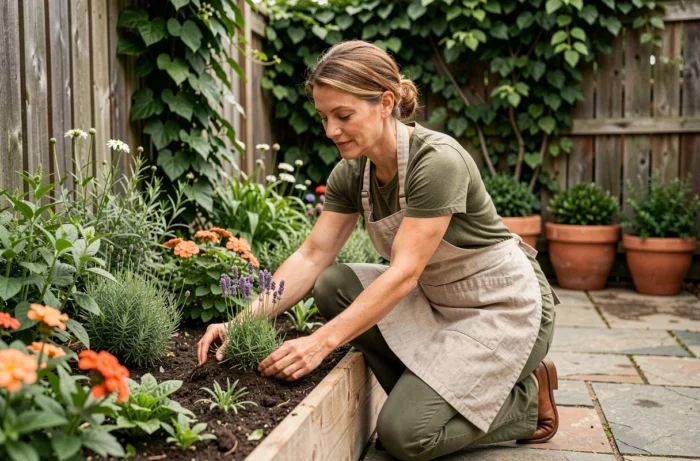
Transforming a garden so it stays green and welcoming all year round means answering a question that is rarely asked upfront: what happens when watering is no longer possible? During a drought emergency, local government orders may ban watering lawns and ornamental plants while imposing strict watering schedules for vegetable gardens.
The government’s VigiEau platform lets you check the rules that apply in each municipality. A garden designed to use little water is not only easier to maintain; it also remains compliant with restrictions, even during a dry summer.
Drought resistance and maintenance: comparing different types of ground cover
Choosing between a traditional lawn, evergreen ground cover and a bed of Mediterranean perennials determines both how much water is needed and how much time you spend on maintenance each week. The table below summarizes the differences for gardens subject to recurring watering restrictions.
| Type of ground cover | Summer water needs | Weekly maintenance | Compliance during “crisis” restrictions |
|---|---|---|---|
| Traditional perennial ryegrass lawn | High | Mowing + frequent watering | Watering prohibited |
| Evergreen ground cover (wild thyme, sedum, lippia) | Low to none once established | Occasional weeding | Remains in place without watering |
| Bed of Mediterranean perennials (lavender, gaura, Russian sage) | Low | Annual pruning | Remains in place without watering |
| Raised-bed vegetable garden | Moderate (targeted) | Watering at the base + harvesting | Watering subject to local government schedules |
The difference between a traditional lawn and suitable ground cover is clear: the former becomes a weak point as soon as a local government order reaches “crisis” level, while the latter makes it through the summer without intervention. For more information on plant options and combinations suited to different soils, https://www.lesprit-jardin.fr offers detailed profiles by species and climate.
Well-chosen ground cover eliminates the need for summer watering and means no mowing. Wild thyme, for example, forms a dense carpet that suppresses weeds and tolerates light foot traffic.
Brush-clearing requirements and natural garden design
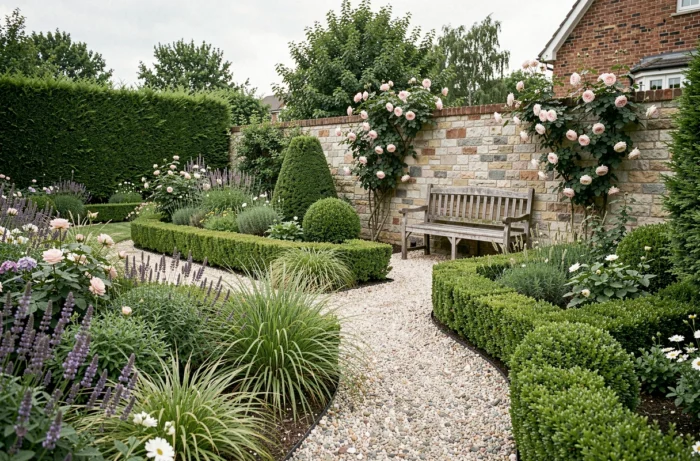
Letting a garden grow freely to encourage biodiversity is not suitable everywhere. In areas at risk of wildfire, the legal requirement to clear brush may extend beyond the property boundary and require strict management of vegetation around the home. Requirements vary according to local orders, so it is essential to check them before making any changes.
Adapting the maintenance schedule to wildfire risk and wildlife
Official guidance recommends scheduling major brush-clearing work in fall and winter. This reduces the risk of fires caused by machinery operating on dry ground and avoids disturbing birds during spring nesting season.
- Fall: trim hedges, shred plant debris, and clear dry areas near the home.
- Winter: prune trees, remove lower branches, and bring the required cleared buffer zone into compliance.
- Spring and summer: limit work to urgent tasks, monitor regrowth, and do not burn garden waste during dry periods.
A garden designed with these constraints in mind from the outset avoids costly rework. Planting low-flammability species (such as holm oak or certain low-growing ground covers) near the house, with looser planting beds farther out, creates a safety gradient that supports biodiversity.
Rainwater harvesting: what restrictions actually allow
Installing a rainwater collection tank is one of the first steps people take to reduce their reliance on the mains water supply. But a rainwater collector does not guarantee the right to water during periods of restriction. Local government orders regulate water use regardless of its source, and exemptions vary from one area to another.
Even after periods of rain, groundwater reserves may remain vulnerable. Information from local authorities indicates that occasional rainfall is not always enough to restore groundwater resources over the long term. Designing a garden around stored water for supplementary irrigation is still a sensible approach, provided it is not the sole foundation of the planting plan.
Prioritize stored water for areas that really need it
The most robust strategy is to reserve collected water for the vegetable garden and new plantings (during the first two years after planting), while choosing self-sufficient perennials and shrubs for the rest of the garden.
A drip irrigation system connected to the tank, combined with a thick layer of mulch (wood chips, straw, ramial chipped wood), retains moisture around plants and limits evaporation, even in extreme heat.

Divide the garden into zones to minimize maintenance
Rather than treating the garden as one uniform area, dividing it into zones according to use and water needs helps focus effort where it matters most.
- Living area (patio, dining area): stone or composite decking, no plant maintenance, furniture ready to use.
- Food-growing area (vegetable garden, herbs): raised beds for controlled soil conditions, targeted watering, easy access.
- Low-maintenance ornamental area: hardy perennials, grasses, ground covers, no watering after the second year.
- Peripheral buffer zone: native shrubs, informal hedging, brush management as required.
Each zone receives exactly the level of care it needs, without wasting time or water on areas that do not need it. Zoning also makes the garden easier for visitors to navigate: it is immediately clear where to sit, where to harvest and where to explore.
Mulch as an all-purpose tool
Mulch can be used in every zone except the patio. In planting beds, it suppresses weeds and keeps the soil cool. In the vegetable garden, it protects roots and gradually enriches the soil. A layer of mulch several centimeters thick effectively suppresses weeds and reduces the need for weeding.
Choosing organic mulch (ramial chipped wood, wood chips, flax straw) rather than mineral mulch (slate, pozzolan) improves soil structure over time, directly benefiting future plantings.
A green, welcoming garden does not depend on abundant watering or hours of weekly mowing. It depends on design choices that take soil, local climate, water restrictions and brush-clearing requirements into account. Once established, plants suited to the site take care of themselves, mulch cuts down on chores, and zoning directs effort where it makes a visible difference.