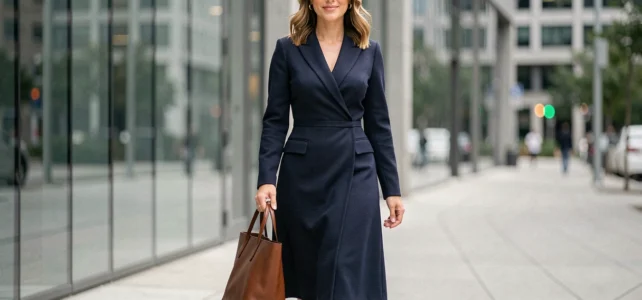
A versatile dress is defined by its ability to function in two distinct clothing contexts, the office and leisure time, without a change of outfit. What sets it apart from a formal dress or a casual dress is a precise balance between structure and flexibility, between sobriety and personality. The choice relies on three technical parameters: the material, the cut, and the color.
Material of the versatile dress: the criterion that the cut cannot compensate for
The fabric alone determines whether a dress remains presentable after eight hours of sitting, a commute, and a terrace at the end of the day. A perfect cut in a fabric that creases or marks the folds loses all its shape by midday.
Synthetic-natural blends (polyester-viscose, polyester-cotton with a percentage of elastane) offer the best compromise. The natural fiber provides breathability, while the synthetic fiber limits wrinkling. Crepe, Milano knit, and thick jersey fall into this category of fabrics that maintain their shape without ironing.
To choose a versatile dress, the wrinkle test remains the most reliable: crumple a section of the fabric in your fist for ten seconds, then release. If the creases disappear in a few moments, the material will hold up throughout the day.
To avoid for office-weekend use: pure linen (wrinkles immediately), satin (too formal for the office, fragile during the day), and untreated fine cotton (distorts at tension points).

Cut of the office-weekend dress: what works according to the silhouette
The cut of a versatile dress must allow for sitting for long periods, walking, and raising arms without the garment riding up or pulling. This functional constraint automatically eliminates very fitted cuts without elastane and overly short styles.
The slightly fitted straight dress
A straight dress with darts at the waist or a removable belt works for most body types. Knee-length or just below is the most adaptable: sufficiently covering for a professional environment, yet modern enough for a weekend in the city.
The wrap dress
The wrap style accentuates the waist without compression. This cut naturally adjusts to different body types thanks to its tying system. It transitions from the office to the restaurant without additional accessories.
The shirt dress
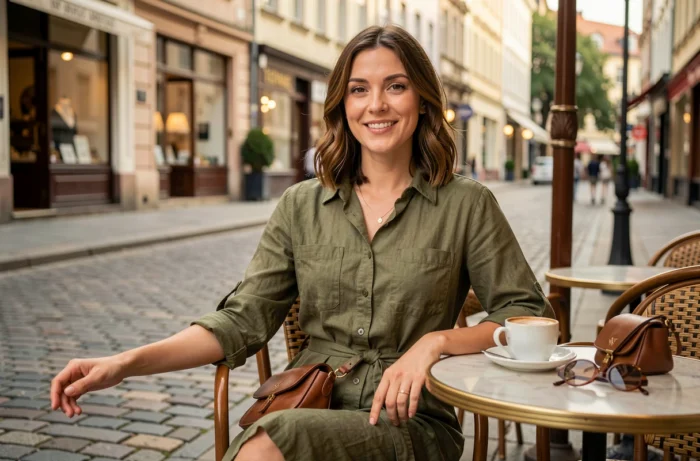
Buttoned at the front, structured collar, long roll-up sleeves: the shirt dress borrows its codes from menswear. Worn belted at the office, open over jeans on the weekend, it is the piece whose versatility relies more on how it is worn than on the dress itself.
- Fitted straight dress: prioritize a fabric with a minimum of elastane for prolonged sitting comfort
- Wrap dress: ensure that the wrap stays in place without a pin; otherwise, the garment becomes a constant constraint
- Shirt dress: choose a collar that is sufficiently rigid so it does not sag by the end of the day
Color and patterns of a dress from office to weekend
The choice of color directly affects the number of different outfits the dress can create. A dress in a color that limits accessory combinations loses its versatility.
Dark neutral tones remain the most cost-effective in terms of combinations: black, navy blue, deep burgundy, forest green. These colors absorb artificial light from the office without appearing dull outside. They can accommodate both a pair of white sneakers and a pump.
Light neutral tones (beige, camel, pearl gray) also work but require a thicker fabric to avoid transparency and more frequent maintenance.
Subtle geometric patterns (fine stripes, spaced polka dots) transition from the office to the weekend effortlessly. However, large floral prints strongly steer the style towards casual and complicate wearing in a classic professional environment.
Accessories to transform a dress: the variable that changes everything
The same dress worn with two different sets of accessories creates two distinct silhouettes. This lever transforms a decent dress into a true versatile piece.
At the office: a structured belt, heels or loafers, a fitted blazer, and discreet jewelry. The blazer alone is enough to formalize any straight or shirt dress.
On the weekend: white sneakers or flat sandals, a soft crossbody bag, denim or leather jacket. Removing the blazer and changing shoes takes two minutes, and the look shifts completely.
- A scarf tied around the neck or as a belt adds color without changing the outfit
- Statement earrings transform a simple look into an evening outfit
- A pair of flats in the bag allows for a quick transition from office to weekend in seconds
The professional dress code has significantly relaxed in recent years. Softer cuts, comfortable fabrics, and personal colors are increasingly accepted, provided the overall look remains polished.
Versatile clothing, capable of transitioning from work to leisure, now represents the leading category in clothing demand. Investing in a dress designed for both contexts is not a fashion compromise; it is the most direct response to how the office and leisure time blend today.