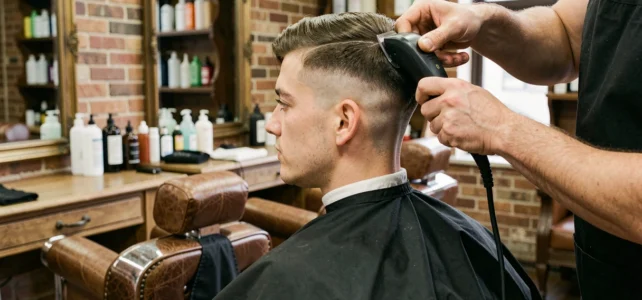
A low fade can produce very different results depending on hair texture, the exact height of the fade, and the level of contrast chosen. Comparing these parameters before sitting in the barber’s chair helps avoid a result that does not match one’s style or daily routine. This article analyzes the variations of the low fade, their actual maintenance constraints, and the style combinations that work according to hair type.
Low fade, taper, and low skin fade: what each variant implies in daily life
The terms are often confused, but each variant of the low fade requires a distinct maintenance rhythm and produces a different look. The table below compares the three most requested options in salons based on criteria rarely put side by side.
| Variant | Starting Height | Visible Skin | Touch-up Frequency | Average Styling Time |
|---|---|---|---|---|
| Classic Taper | Below the temple, long transition | No | Every 4 to 5 weeks | Low (natural drying possible) |
| Low Fade | Just above the ear | Possible depending on the guard | Every 2 to 3 weeks | Moderate (styling product often needed) |
| Low Skin Fade | Above the ear, faded to the skin | Yes | Every 2 weeks maximum | Moderate to high (contrast to maintain) |
The classic taper is more forgiving of the time between salon visits. The soft transition hides regrowth longer. In contrast, a low skin fade loses its sharpness in less than two weeks, which requires a more frequent visit schedule.
To delve deeper into low fade haircut techniques for men, the distinction between these three variants remains the most reliable starting point before any request in the salon.

Choosing a low fade based on hair texture and actual routine
The majority of guides recommend a style based on a photo. The problem: a photo shows a fixed result, styled by a professional, often retouched. It says nothing about how the hair behaves when waking up or the time available each morning.
Straight or Fine Hair
A low fade with little contrast works well on straight hair. The transition remains clean even without styling product. The top can be worn as a textured french crop or simply combed to the side.
On fine hair, a fade that is too short accentuates the lack of volume on top. Keeping a minimum guard of 2 on the sides (explicitly ask for “no shorter than a 2”) preserves the visual balance between the top and bottom.
Curly or Frizzy Hair
Curls radically change the look of a low fade. The transition appears softer due to natural volume, but regrowth quickly creates a “mushroom” effect if the initial contrast is too pronounced.
- Prefer a taper rather than a skin fade to space out touch-ups without losing shape
- Request scissor finishing in the last centimeters of the junction between the fade and the top, as clippers alone create too harsh a line on curly hair
- Avoid a bald fade if the salon visit frequency exceeds three weeks
Kinky Hair
A low fade on kinky hair offers a structured frame that highlights the volume on top, whether in a curly cut, short afro, or twist. Scissor finishing at the junction is recommended to avoid an artificial demarcation line.
The styling time directly depends on the style worn on top. A defined curly style requires daily hydration and shaping. A short afro requires little maintenance but needs more frequent fade touch-ups to maintain the line.
Low fade and top style: combinations that last
The low fade serves as a frame. The style is played out on top. Some combinations age better than others between two visits to the barber.
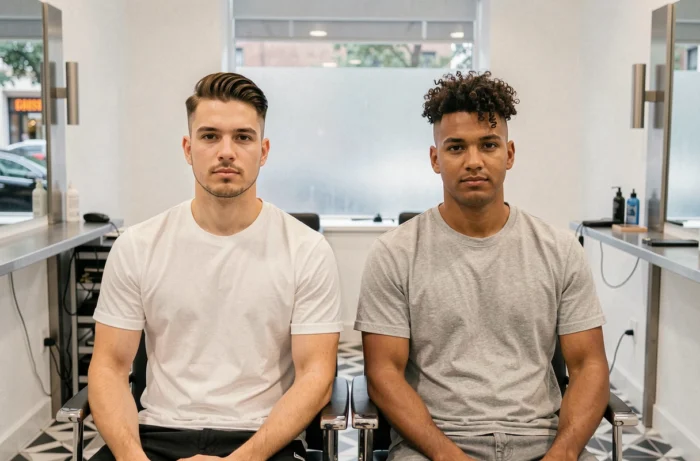
Low Fade and Pompadour
The pompadour with a low fade remains one of the most photographed styles, but also one of the most demanding. It requires volume, so sufficiently thick hair, and a styling product applied every morning. Without daily styling, the pompadour falls flat and loses all its effect.
For a lasting result, a classic taper is preferable to a skin fade. The taper better accommodates regrowth and maintains the proportions of the pompadour longer.
Low Fade and Buzz Cut
Conversely, the buzz cut combined with a low fade requires very little styling. The time saved each morning is real. The constraint shifts to the touch-up frequency: the contrast between the closely shaved top and the fade on the sides fades quickly.
Low Fade and Textured Cut or French Crop
The textured cut with a short fringe (french crop) represents a good compromise. Styling is limited to a few seconds with a matte wax or texturizing spray. The french crop with a low fade remains clear even after three weeks without a touch-up, making it a practical option for those who space out their salon visits.
Requesting a low fade in the salon: parameters to specify
Bringing an inspiration photo helps, but is not enough. Recent sources emphasize the need to separately define three parameters with your barber, rather than asking for a vague “low fade.”
- The starting height: just above the ear for a classic low fade, a bit lower for a discreet taper
- The level of contrast: visible skin or not, desired minimum guard (specify “no visible skin” if that is the choice)
- The expected transition: gradual fade over several centimeters or a sharper demarcation between lengths
Specifying your salon visit frequency also allows the barber to adjust the initial contrast. A client who returns every two weeks can afford a skin fade. Someone who spaces their visits to four weeks or more should consider starting with a taper or a moderate low fade.
The texture of the hair, the style on top, and the touch-up rhythm form a triangle. Changing one parameter affects the other two. A well-calibrated low fade on these three axes retains its shape longer and truly corresponds to the daily life of the person wearing it.