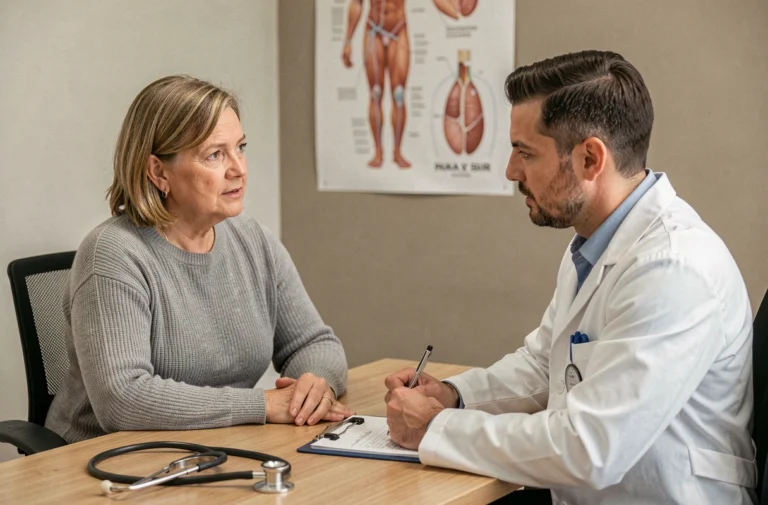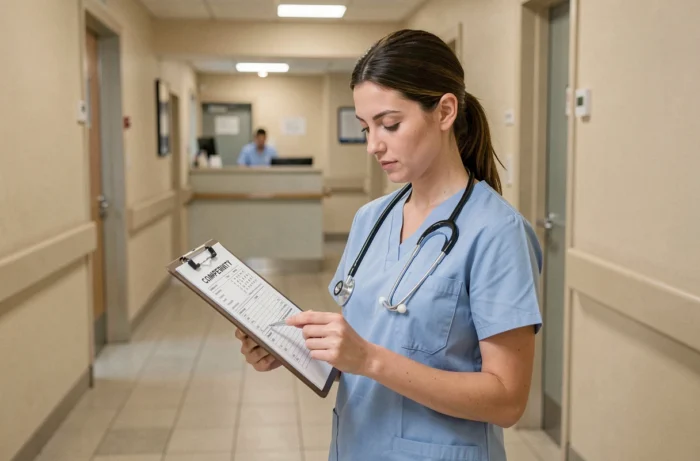
A nursing assistant measuring the capillary blood glucose of a diabetic patient, then relaying the result to the nurse to adjust the protocol: this action, still vague in the old framework, is now part of the acts explicitly regulated by the 2026 reform. The new nursing assistant framework does not merely add lines to an administrative document. It redefines what each professional can do, under what conditions, and with what level of responsibility.
Qualiopi 2026 and nursing assistant training: a connection not to be overlooked
Most analyses of the reform focus on technical gestures. They overlook a parameter that conditions access to training itself: the Qualiopi quality framework.
The national quality framework has been updated to include an additional indicator. This evolution applies to all training providers seeking public or pooled funds, including IFAS.
In practical terms, organizations training nursing assistants will need to demonstrate consideration of risks of violence, discrimination, and disability in their reception systems. An IFAS that does not comply will lose its funding, and thus its ability to issue the DEAS.
For professionals currently in position who are considering updating their skills, it becomes useful to verify that the chosen organization displays this updated certification. The comparison of the skills in the nursing assistant framework 2026 also details the skill blocks affected by these changes.
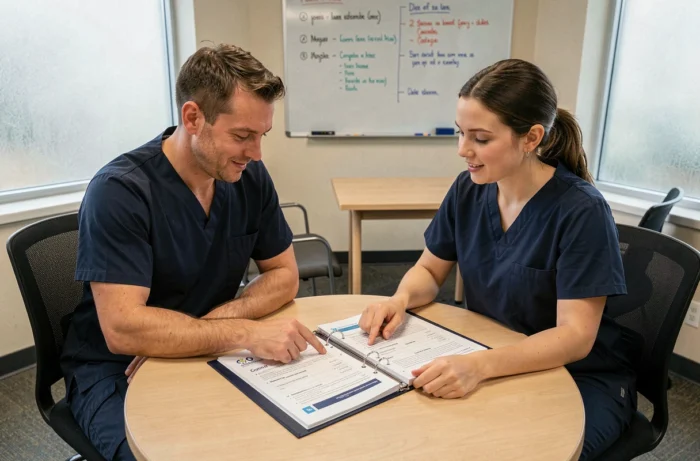
Nursing assistant framework 2026: the skills that really change
Have you ever read lists of “new acts” without knowing what changes in your daily practice? The problem often stems from a confusion between authorized acts and expected competencies. The reform distinguishes between the two levels.
Extension of technical gestures under protocol
The decree of February 26, 2025, whose effects will fully unfold in 2026, expands the scope of gestures that nursing assistants can perform. These gestures remain governed by a prescription or nursing protocol. The nursing assistant does not prescribe but executes technical acts within a secure framework.
Among the notable developments:
- The measurement of simple biological parameters (capillary blood glucose, oxygen saturation) with structured transmission of results to the care team.
- Naso-pharyngeal suctioning under protocol, which was previously reserved for nurses in certain establishments.
- Active participation in the clinical assessment of pain, using validated scales and traceability in the patient file.
These acts are not “new” in the sense that some nursing assistants were already practicing them informally. The reform moves them from legal ambiguity to an enforceable framework.
Relational competence and coordination within the care team
The 2026 framework is not limited to gestures. It formalizes a competence that the old text underestimated: the ability to communicate relevant clinical observations.
A concrete example: the nursing assistant notices a change in behavior in a resident in a nursing home (unusual agitation, food refusal). In the old framework, communication was expected but poorly structured. The new text imposes written traceability and shared analysis with the nurse.
This increase in relational and clinical competence brings the profession closer to level 4 (equivalent to the baccalaureate), a elevation already established in initial training since 2021 but whose practical consequences are now materializing.
Funding for DEAS apprenticeship: what changes on September 1, 2026
Decree No. 2026-832 of August 29, 2026, introduces a unique framework of levels of care (NPEC) for all apprenticeship contracts. The CFA that trains nursing assistants in alternating education must comply with this starting September 1, 2026.
Why does this matter for competencies? Because funding conditions the volume of hours of practical training. A reduced NPEC decreases the time for clinical simulation, thus affecting the ability to acquire the new technical gestures.
For students in the DEAS apprenticeship program, it is essential to check with the CFA if the funding amount covers the entire program, including modules related to expanded acts. A funding gap may result in fewer practical hours on the most recent gestures of the framework.
Bridge from nursing assistant to IFSI: impact of the nursing reform 2026
The reform does not only affect nursing assistants. The nursing curriculum itself is undergoing a revamp, with enhanced university integration and revised clinical expectations. For nursing assistants considering a transition to IFSI, the two reforms intersect.
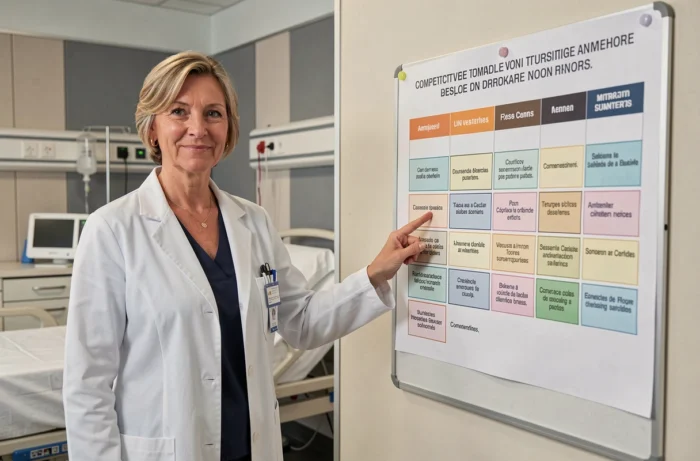
The new nursing assistant framework has been designed to facilitate this bridge. The skill blocks are formulated to partially correspond to the teaching units of the state nursing diploma. A nursing assistant who masters the clinical assessment of pain, for example, enters IFSI with a foundation already validated.
This articulation between the two diplomas represents a structural change. It transforms the DEAS into a first step in a progressive health career, rather than a professional dead end.
Professionals already in position who wish to have their experience recognized can also go through the VAE. The system remains accessible to nursing assistants who can justify a sufficient duration of practice, and the skill blocks of the new framework now serve as an evaluation grid.
The 2026 reform of the nursing assistant framework produces cascading effects: on authorized gestures, on initial and continuing training, on apprenticeship funding, and on pathways to the nursing profession. Each skill block has been redesigned to fit into a pathway, not into a fixed position. The establishments and professionals concerned have an interest in aligning their internal practices with the requirements of the new text now.