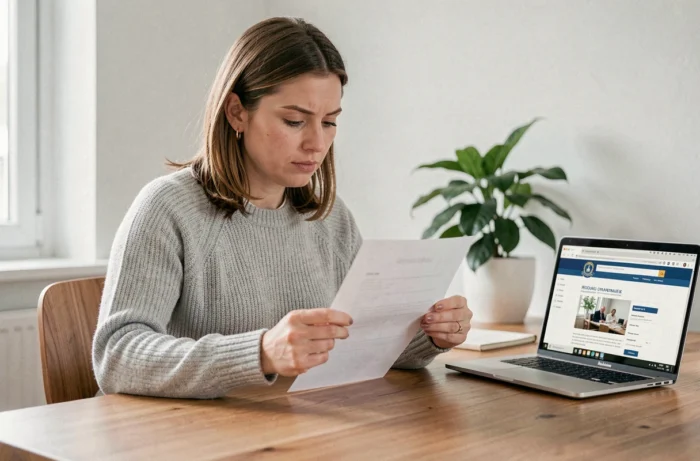
We are looking for the official address of a streaming platform like Padraz, we type the name into a search engine, and we come across three or four similar results. Same logos, same colors, domain names that are almost identical except for one letter. The problem is not finding a link, but finding the right one, the one that actually corresponds to the legitimate entity and not a copy set up to siphon personal data.
Micro-variations in domain names: the trap that the address bar does not signal
Fraudsters no longer create grossly imitated sites. They register domain names where only one letter changes, a hyphen is added, or a suffix differs. On a smartphone screen, the difference between “padraz.com” and “padrazz.com” goes unnoticed.
The common AMF-ACPR pole added more than 1,300 new unauthorized site names to its blacklists just in 2025, bringing the total to over 9,000 entries. This inflation shows that simply searching for the name “Padraz” on Google is no longer sufficient. Clones sometimes position themselves in sponsored ads, above the real site.
You can find the address of Padraz or the new name of Faklum by cross-referencing several reliable sources rather than clicking on the first result displayed. This is the only method that holds up against copies so close to the original.
The reflex to adopt: compare the exact name, the postal address, the phone number, and the URL on an official register. If any one of these elements differs, you are probably facing a fake.

Official registers and business verification: the method that replaces blacklists
Checking if a site is on a blacklist is useful but incomplete. A new clone can operate for weeks before being added. The reverse approach is more solid: confirm that the entity is listed on a register of authorized professionals.
Check registration before any interaction
For a video content or streaming platform, you first check its registration in the commercial register. In France, the data is accessible through the commercial court registries. You can find the company name, the registered address, and the SIREN number there.
If the site you are visiting displays an address different from that in the register, or if no SIREN number matches, it is a major warning sign. Feedback on this point varies depending on foreign platforms, but for any entity operating in France, this verification is accessible for free.
Cross-check information with legal notices
The legal notices of a website must indicate the name of the publisher, its address, a contact number, and, for companies, the registration number. A fake site often omits this information or displays false ones. Here’s how to proceed:
- Copy the postal address indicated in the legal notices and search for it on a mapping service to verify that it corresponds to a real business location.
- Compare the displayed SIREN number with that of the commercial register: they must be strictly identical, without variation.
- Check that the domain name is consistent with the registered company name, paying attention to hyphens, double letters, and extensions (.fr, .com, .net).
A fake site almost never displays complete and verifiable legal notices. This is the quickest test to perform before creating an account or entering a payment method.
Browser security and real-time control tools
Beyond manual verification, some technical tools filter fraudulent sites even before you access them. A good antivirus now includes a web protection module that compares visited URLs to databases updated daily.
VPNs, antivirus, and browser extensions
A VPN does not protect against fake sites, but it encrypts the connection, preventing data interception on a public network. The real barrier remains the antivirus combined with a browser extension specialized in phishing detection.
Several free solutions or those integrated into recent browsers signal suspicious sites with a red banner or automatic blocking. Activating these protections significantly reduces the risk of encountering a clone of a platform like Padraz.
Visual signals to spot in the browser
- A padlock in the address bar does not guarantee the legitimacy of the site: SSL certificates are accessible to anyone. However, the absence of a padlock is an immediate exclusion signal.
- Spelling mistakes in the URL or on the homepage remain a reliable marker, even if clones are improving.
- Intrusive ads or multiple redirects to payment pages are typical of fraudulent sites that imitate streaming or VPN platforms.
- A legitimate site never asks for payment via cash mandate, prepaid card, or transfer to an account outside the European Union.

Reporting a fake Padraz site: the steps that work in France
When you identify a clone, reporting it speeds up its removal and protects other users. The PHAROS platform, managed by the Ministry of the Interior, allows you to report a suspicious URL in just a few minutes. For financial scams, the THESEE platform allows you to file a complaint online without going to the police station.
The DGCCRF also handles reports related to fake sites that charge for services that are normally free. If you have provided banking information on a dubious site, contacting your bank within hours remains a priority: the time limit for disputing a card payment is limited.
Finding the official address of a streaming platform or video content like Padraz involves a simple reflex: never trust a single search result. Cross-referencing the commercial register, legal notices, and a real-time verification tool takes two minutes. That’s the time it takes for a fake site to copy your credentials.