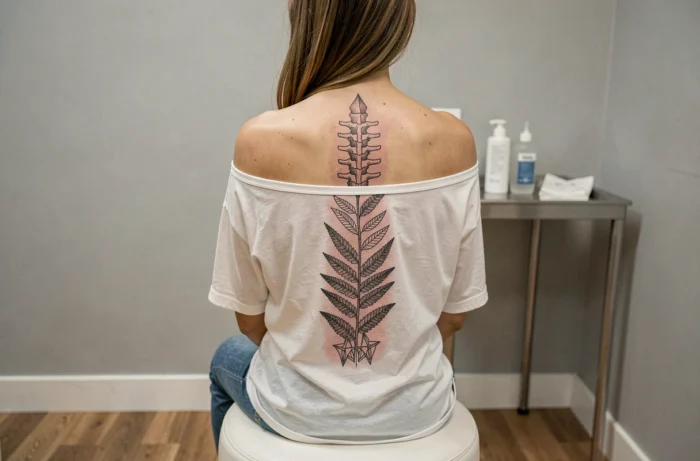
The spine has a density of nerve endings that is significantly higher than most tattooed areas. The needle works on thin skin, stretched directly over the spinous processes, with very little fatty tissue to cushion the vibrations. This tattoo requires specific preparation, both for managing pain during the session and for the healing phase, where daily friction complicates recovery.
Bone vibrations and nerve irradiation: what makes the spine so sensitive
The unique sensation of a spinal tattoo is not limited to a classic sting pain. The needle strikes an area where the skin directly covers the bone, with no significant muscle layer in between. This contact generates vibrations that travel along the vertebrae, sometimes felt all the way to the chest or pelvis.
The nerve endings that emerge between each vertebra amplify this sensation. The pain can radiate laterally, towards the ribs or flanks, even if the tattoo artist is strictly working on the midline. This irradiation often surprises those accustomed to tattoos on fleshier areas like the arm or thigh.
The upper back, between the shoulder blades, and the lower lumbar area, at the level of the sacrum, are generally described as the most challenging segments. The mid-dorsal area, where the skin is slightly thicker, offers a relative respite. Knowing these variations allows one to anticipate the difficult moments of the session and adjust pain management and post-tattoo care for spinal tattoos accordingly.
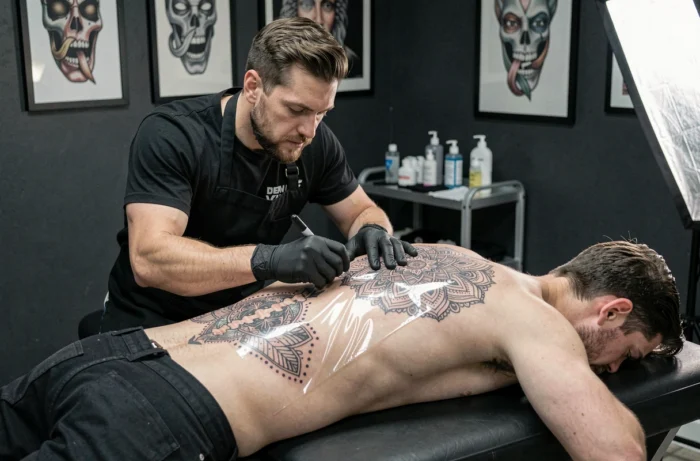
Preparing your body before a spinal tattoo session
The body naturally produces endorphins in response to pain, molecules comparable to endogenous morphine. Their effectiveness depends on the physical and mental state at the time of the session. Several factors directly influence this adaptability.
Getting enough sleep the night before is essential. Fatigue lowers the pain tolerance threshold and reduces endorphin production. A complete meal, rich in slow sugars, consumed two to three hours before the appointment stabilizes blood sugar levels and prevents vagal discomfort, which is common during long sessions on sensitive areas.
- Avoid alcohol and coffee in the hours leading up to the session: they increase skin sensitivity and can cause more abundant bleeding, which dilutes the ink and complicates the tattoo artist’s work.
- Moisturize the skin on the back in the days leading up to the session with a neutral, fragrance-free cream: supple skin accepts ink better than dry or irritated skin.
- Plan to wear loose-fitting clothing that can be easily put on after the session, made from natural fibers like cotton, to limit friction on the freshly tattooed area.
The level of stress plays a direct role. A tense state contracts the back muscles, making the tattoo artist’s job more difficult and amplifying the perceived pain. Slow breathing techniques, inspired by heart coherence, help maintain muscle relaxation during the session.
Friction and mechanical pressure: the real challenge of back healing
The healing of a spinal tattoo presents a problem that other locations do not experience with the same intensity: the back is a zone of constant contact. Chair backs, car seats, mattresses, bag straps, seat belts—all put pressure on this surface for several hours a day.
These repeated frictions cause mechanical irritation that increases the risk of thick scabs (scabbing) and can tear ink fragments before they are fully set in the dermis. The resulting loss of pigment creates uneven areas that sometimes require touch-ups.
Adapting sleep and posture habits
Sleeping on your stomach or side during the first few weeks protects the area. Placing a clean cotton sheet on the mattress each night reduces the risk of bacterial contamination. Synthetic sheets retain more heat and sweat, which can prematurely soften scabs.
At the office or in the car, placing a clean cloth between the back and the chair back limits direct friction. Avoiding tight clothing and straps during the entire healing phase remains the most frequently overlooked precaution.
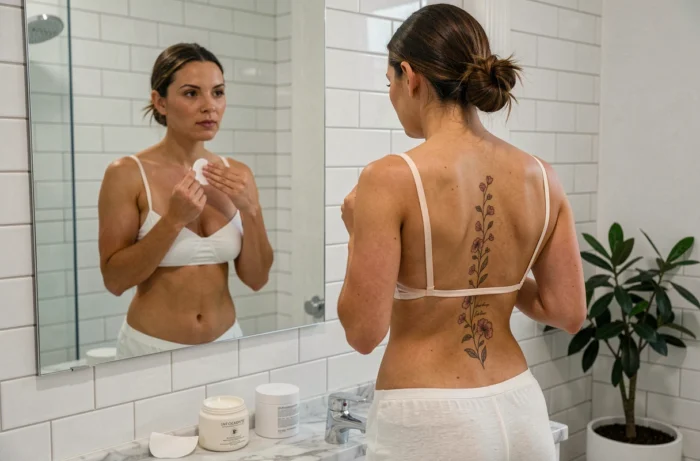
Resuming sports and recovery after a spinal tattoo
The first 48 hours after the session are the most critical window. The skin is an open wound, and any activity that causes excessive sweating on the back promotes maceration and infection. Sweat, which is acidic, irritates the area and can alter the ink’s retention.
After this period, a gradual return to light activities is possible, provided that any exercise involving direct back contact is avoided: weight benches, exercise mats, contact sports. Swimming should be avoided for a longer time, as chlorine and bacteria present in stagnant water can irritate the healing skin.
- During the first 48 hours: complete rest, gentle cleaning with lukewarm water and a mild soap, application of a thin layer of healing cream recommended by the tattoo artist.
- From the first to the third week: light physical activity without direct back contact, loose clothing, short lukewarm showers without rubbing the area.
- After three weeks: gradual resumption of all activities, monitoring for any signs of redness or unusual itching.
The complete healing of a spinal tattoo often takes longer than in other areas, precisely because of the unavoidable daily friction. Patience during this phase directly affects the final quality of the result and the sharpness of the lines, especially for fine line designs that do not forgive any loss of pigment.
A tattoo on the spine remains a demanding project, where success depends as much on the weeks following the session as it does under the needle. Choosing an experienced tattoo artist in this area, capable of adapting their technique to the delicacy of the back skin, is one of the factors to check before making an appointment.