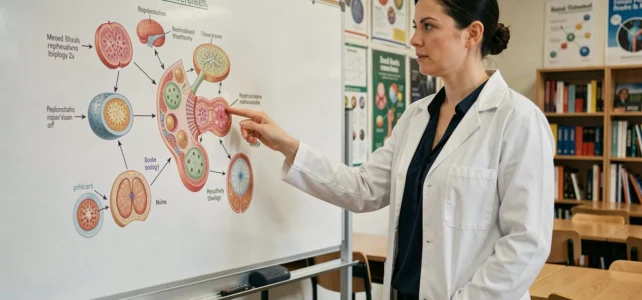
Sexual reproduction refers to the mode of reproduction that relies on the fusion of two specialized cells, the gametes, derived from two individuals of different sexes (or sometimes from the same organism in certain species). This process generates a new genetically unique individual, distinct from each of its parents.
Understanding this mechanism involves breaking down three fundamental steps: the formation of gametes through meiosis, the actual fertilization, and then the development of the zygote. Each of these phases adheres to specific biological constraints.
Meiosis and gametogenesis: the production of reproductive cells
Before any fertilization, each organism must produce haploid gametes, meaning cells that contain only half of the chromosomal heritage of the species. In humans, this means reducing from 46 chromosomes (organized into 23 pairs of homologous chromosomes) to 23 chromosomes per gamete.
Meiosis is the cell division that accomplishes this reduction. It occurs in two successive divisions. The first division, called reductional, separates the pairs of homologous chromosomes. The second, called equational, separates the chromatids of each chromosome, somewhat like a classic mitosis.
A crucial phenomenon occurs during the first division: genetic recombination through crossing-over. Homologous chromosomes exchange segments of DNA with each other, creating novel gene combinations. This intrachromosomal recombination, combined with interchromosomal recombination (the random distribution of paternal and maternal chromosomes into each gamete), explains why each gamete is genetically unique.
To learn everything about sexual reproduction and its facilitating mechanisms, gametogenesis is the foundation to master.
The production of gametes differs by sex. Spermatogenesis continuously produces millions of sperm in the testes from puberty onward. Oogenesis, on the other hand, operates in cycles: typically, only one oocyte matures per menstrual cycle, released during ovulation.
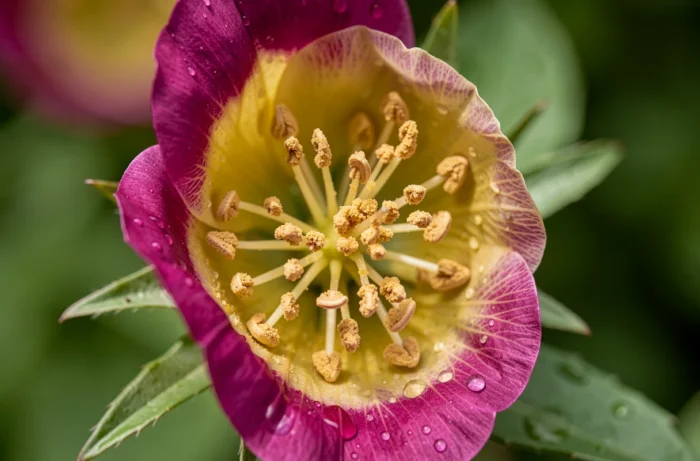
Fertilization: the meeting of gametes and the formation of the zygote
Fertilization is the moment when a sperm cell fuses with an oocyte to form a diplod zygote (or fertilized egg). This cell restores the complete number of chromosomes for the species, which is 46 in humans.
This process is not instantaneous. It follows several precise steps:
- The specific recognition between the sperm and the zona pellucida of the oocyte, ensuring that only gametes of the same species interact
- The acrosome reaction, during which the sperm releases enzymes to penetrate the protective layers of the oocyte
- The fusion of the plasma membranes of the two gametes, followed by the cortical reaction that blocks the entry of other sperm (prevention of polyspermy)
- The fusion of the nuclei (karyogamy), which combines the paternal and maternal genetic material into a single nucleus
Two main types of fertilization are distinguished based on the living environment. External fertilization occurs in aquatic environments: gametes are released into the water (frogs, sea urchins, most fish). Internal fertilization takes place within the female’s reproductive tract, as is the case in mammals, birds, and reptiles.
Why external fertilization requires a colossal number of gametes
In an aquatic environment, the probability of gamete encounter is low. Organisms compensate with massive production. This strategy contrasts with that of species with internal fertilization, which invest more in the protection and development of each embryo.
Hormonal cycle and ovulation in mammals
In mammals, sexual reproduction is not limited to meiosis and fertilization. It depends on a hormonal cycle that synchronizes the maturation of the oocyte and the preparation of the uterus.
The human menstrual cycle consists of two main phases. The follicular phase, of variable duration, sees an ovarian follicle mature under the influence of pituitary hormones (FSH and LH). Ovulation occurs at the peak of LH, releasing the oocyte into the fallopian tube.
The subsequent luteal phase prepares the uterine lining for potential implantation. If fertilization does not occur, the drop in progesterone levels triggers menstruation, and a new cycle begins.
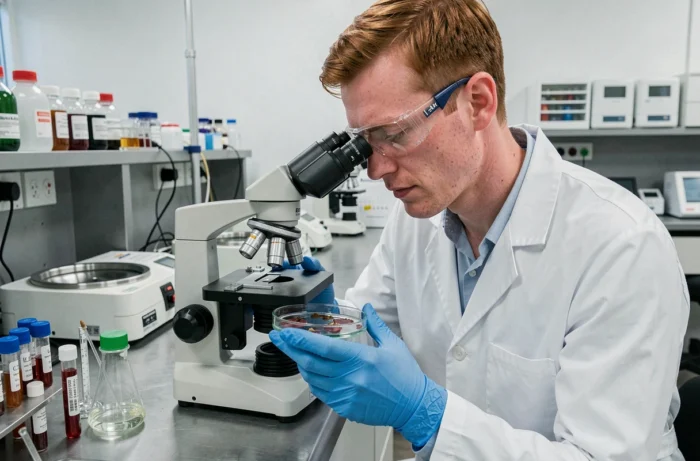
Endocrine disruptors and follicular maturation
Recent studies document the impact of environmental pollutants on these mechanisms. A study on polystyrene microplastics (GEO dataset GSE305839) highlighted a direct alteration of the stages of follicular maturation and hormonal regulation. This type of research shows that the mechanisms of sexual reproduction do not operate in isolation: they are sensitive to contemporary environmental conditions.
Sexual reproduction and genetic diversity: a major selective advantage
Sexual reproduction has a high biological cost (finding a partner, producing gametes, risks associated with mating). If it persists massively in living organisms, it is because it generates a considerable genetic diversity with each generation.
Three mechanisms contribute to this:
- Intrachromosomal recombination (crossing-over during meiosis)
- Interchromosomal recombination (random distribution of homologous chromosomes)
- The random meeting of gametes during fertilization
This diversity provides populations with the capacity to adapt to environmental changes, parasites, and diseases. Recent research on insect species shows that lineages that have abandoned sexual reproduction for millions of years end up accumulating deleterious mutations, confirming the long-term advantage of genetic recombination.
Sexual reproduction remains the dominant mode of reproduction among complex organisms, from mammals to flowering plants. Its combination of meiosis, fertilization, and hormonal regulation forms a system where each step conditions the next, and where disruption, whether genetic or environmental, directly affects the fertility of a species.