
The technical inspection of a passenger car must be carried out for the first time within the six months preceding the fourth anniversary of its date of first registration. This date is indicated on the registration certificate, not on the purchase invoice or delivery note. Confusing the two shifts the calculation and unknowingly exposes one to an infraction.
Date of registration and registration certificate: the key point to check first
Box B of the registration certificate indicates the date of first registration of the vehicle. It is this date, and only this one, that serves as the starting point for calculating the technical inspection. For a new vehicle, it generally corresponds to the day of initial registration. For a used vehicle, it goes back to the first owner.
Many drivers reason from the date of purchase or the date of delivery. The mistake is common when acquiring a recent vehicle that has already been registered for a few months at the dealership. A vehicle registered in March 2022 but delivered in September 2022 must undergo its first inspection before March 2026, not before September 2026.
To know the date of the car’s technical inspection with certainty, simply start from this box B and add four years for the first inspection, then two years for each renewal.

Technical inspection report: reading the expiration date
The report issued at the end of each periodic visit mentions two distinct dates. The first corresponds to the day the inspection was carried out. The second indicates the expiration date, in other words, the deadline by which the next inspection must be performed.
It is this second date that matters. It usually falls two years after the day of the inspection, unless a re-inspection is required. Keeping this document in the glove compartment remains the most direct way to check the deadline without calculation.
What to do if the report is lost
A duplicate can be requested from the inspection center that conducted the visit. The HistoVec platform, managed by the Ministry of the Interior, also allows you to consult the history of technical inspections of a vehicle using its registration number and the registration certificate formula number. HistoVec now integrates data from the technical inspection, making it a reliable tool for retrieving a lost date.
Removal of the sticker from the windshield: what changes concretely
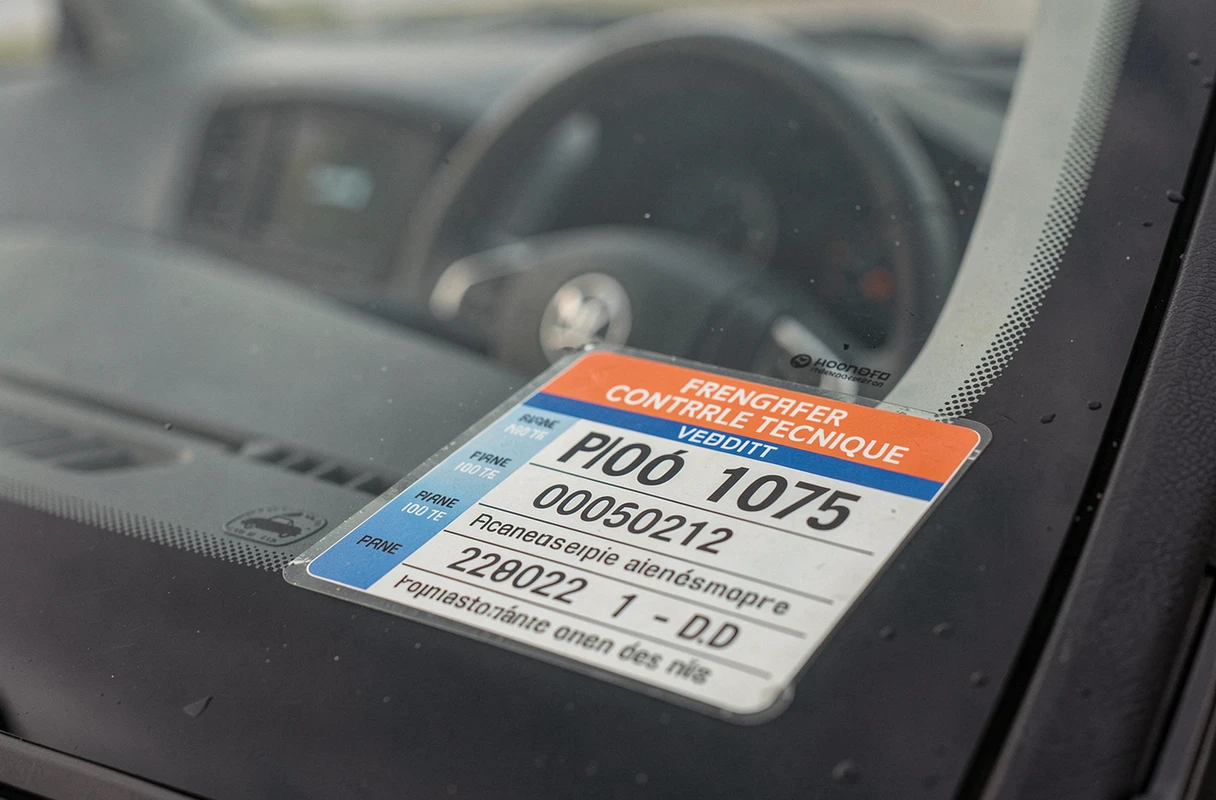
As of April 1, 2024, the technical inspection sticker on the windshield is no longer mandatory. This removal does not change the obligation to undergo the inspection itself, but it alters the way one checks its date on a daily basis.
Before this date, a glance at the windshield was sufficient. Now, it is necessary to consult the paper report, the registration certificate, or the digital history via HistoVec. For motorists who were used to relying solely on the sticker, the risk of forgetting increases.
- The technical inspection report, kept in the vehicle, clearly states the validity date.
- The registration certificate (field of the registration document) allows recalculating the deadline based on the date of first registration.
- HistoVec provides access to the complete history of inspections with associated dates, free of charge and online.
No tolerance after the deadline: fine and immobilization
No grace period exists after the expiration date. From the day after the deadline, driving with an expired technical inspection constitutes an infraction. The fixed fine amounts to 135 euros. Law enforcement can also immobilize the vehicle and retain the registration certificate.
This lack of legal leeway is often misunderstood. Some motorists believe they have a few extra days or weeks, but the regulations do not provide for anything of the sort. In practice, anticipating by a few weeks remains the best strategy to avoid any unpleasant surprises related to a full inspection center or an unfavorable result requiring a re-inspection.
Re-inspection and repair deadline
In the event of a major failure noted during the inspection, a re-inspection must be conducted within two months. This period starts from the date of the initial inspection. If repairs and the re-inspection are not completed within this timeframe, a full inspection must be redone.
For a critical failure, the vehicle cannot be driven from the day after the inspection. The re-inspection period is then reduced, and the vehicle must be transported without driving (flatbed, tow truck) to the garage and then to the inspection center.
Sale of a vehicle and validity of the technical inspection
When selling a vehicle older than four years, the seller must provide a technical inspection dated less than six months at the time of the transaction. It is not the usual two-year validity date that applies here, but rather a ceiling of six months between the inspection date and the signing of the sale.
An inspection carried out in January remains valid for a sale concluded in June, but not in August. This rule often traps sellers who postpone the sale by a few months after having the inspection done.
- The technical inspection must be favorable or only contain minor failures for the sale to be valid.
- If the inspection reveals major failures, the re-inspection must be completed before the transfer.
- Classic vehicles benefit from an extended periodicity of five years, but the six-month rule in case of sale remains the same.
Scheduling a reminder a few weeks before the deadline, whether on a phone or a paper calendar, helps avoid most forgetfulness. With the removal of the sticker, this habit becomes the last safety net before the fine.